Bulging Disc Symptoms & Treatment Options
Also Known as Disc Protrusion & Herniated Disc, A bulging disc is often called a disc protrusion, or disc extrusion, annular tear, prolapsed disc, or a ruptured disc. A disc bulges when a tear forms in the outer portion of the disc, allowing the softer disc center to move outward. This can occur anywhere in the spine and is the most common cause of low back pain/sciatic pain. Occasionally, herniated discs visible on an MRI produce no pain or symptoms.
Bulging may result from aging or wear and tear, and may also be called degenerative disc disease. Sudden forces applied to the spine in a motor vehicle accident can be severe enough to start the process of bulging with a tear to annular fibers. Poor lifting techniques, prolonged sitting, being overweight, smoking and a sedentary lifestyle may also contribute to their development. The pain from this condition can often be treated with a minimally-invasive, outpatient pain management therapy.
Most SpineOne patients achieve significant improvement from pain resulting from this condition, and are able to return to their normal routines and activities shortly after treatment.
Bulging Disc Symptoms
- Pain/numbness in the buttocks and/or leg
- Pain/numbness in the shoulder and/or arm
- Pain/numbness in the shoulder blades and/or chest
- Pain when sneezing, coughing and/or laughing
- Loss of bladder or bowel control (requires immediate medical care)
Bulging Disc Treatment
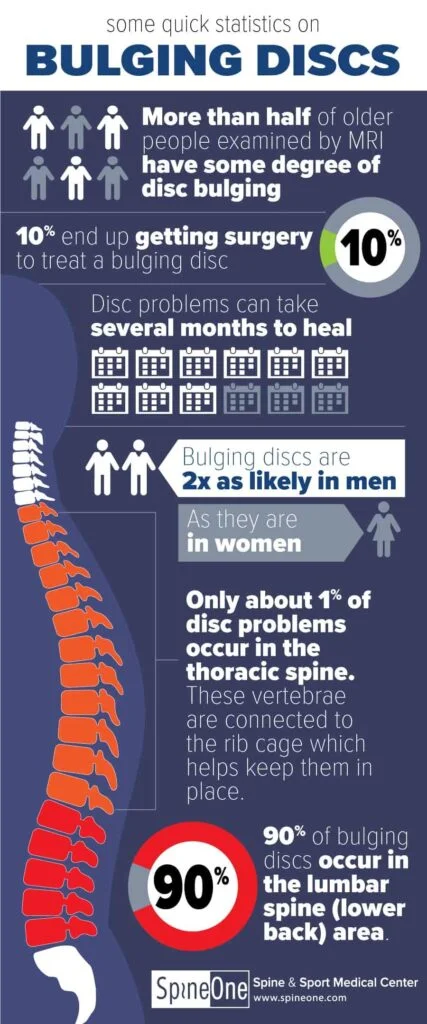
Bulging Disc Infographic: Statistics & Patterns
This bulging disc infographic explores the community of patients experiencing this system. Bulging Discs, also called herniated discs and disc protrusions, occur when a tear forms in the outer portion of the disc, allowing the softer disc center to move outward. This can occur anywhere in the spine and is the most common cause of low back pain/sciatic pain.
As the bulging disc infographic shows, bulging discs visible on an MRI often produce no pain or symptoms. Bulging may result from aging or wear and tear, and is also called degenerative disc disease. Sudden forces applied to the spine in a motor vehicle accident can be great enough to start the process of herniation with a tear to annular fibers.
Poor lifting techniques, prolonged sitting, being overweight, smoking and sedentary lifestyle may contribute to the development of a bulging disc.
SpineOne treats bulging discs with a combination of rest, anti-inflammatory medication, physical therapy, and minimally-invasive therapies.
These treatments offer effective and lasting relief from disc degeneration and also provide an alternative to open back surgery. Your doctor will likely order advanced diagnostic imaging to confirm the rupture. Patients who follow this treatment plan report significant reduction of their pain and improvement of their range of motion and quality of life.